You Don't Need a PhD to Discover Something New in Space — Here's How to Start
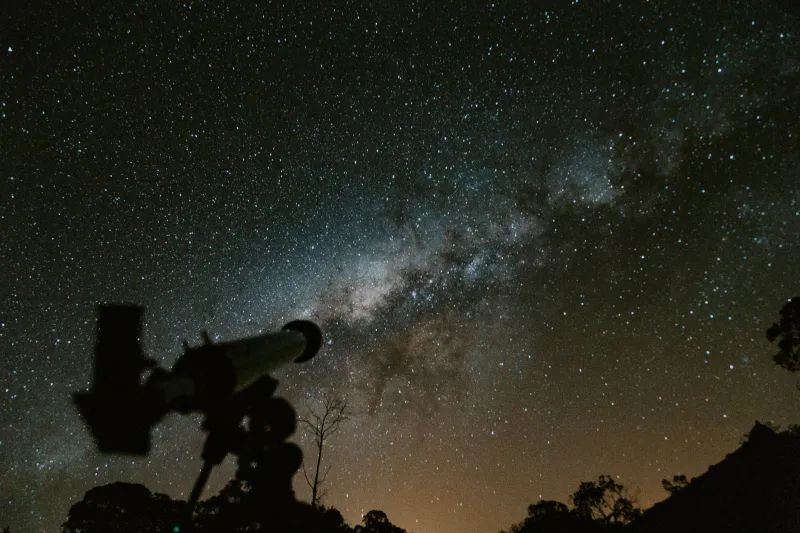
Let's clear something up right away: citizen science isn't just a feel-good participation trophy. It's a legitimate, essential part of modern astronomical research. Professional astronomers are drowning in data — from space telescopes, all-sky surveys, and radio observatories — and there genuinely aren't enough trained researchers to analyze all of it. That's where you come in.
Whether you're a high schooler in Ohio with a secondhand telescope, a retiree in Arizona with a clear sky and a laptop, or just someone who finds the cosmos endlessly fascinating, there are real ways to contribute to real science. Here's how.
Why Scientists Actually Need Your Help
Modern astronomy is a data problem as much as a physics problem. The Vera C. Rubin Observatory in Chile, when fully operational, will generate around 20 terabytes of data per night. The Square Kilometre Array will produce more data than the entire internet in its early operational phase. No team of professional researchers can manually process that volume.
But there's also something more specific going on. Human pattern recognition is genuinely better than machine learning for certain tasks — particularly spotting unusual or anomalous features in images. Algorithms trained on known objects can miss the truly weird stuff. Human eyes catch things that fall outside the training set. That's not a limitation of technology; it's an advantage of human cognition that researchers have learned to harness strategically.
Galaxy Zoo: Where It All Started
If there's a founding story for modern astronomical citizen science, it's Galaxy Zoo. Launched in 2007, the project asked volunteers to classify galaxy shapes from images captured by the Sloan Digital Sky Survey. Within 24 hours of launch, the site was receiving 70,000 classifications per hour. Within a year, over 150,000 volunteers had classified nearly 50 million galaxies.
More importantly, it worked. Galaxy Zoo produced peer-reviewed science. Volunteers discovered Hanny's Voorwerp — a bizarre glowing green cloud of gas that turned out to be illuminated by a quasar that had since switched off, like a cosmic flashlight being turned off and leaving a glow behind. That discovery came from a Dutch schoolteacher named Hanny van Arkel, who had no formal astronomy training. It's now the subject of ongoing research.
Galaxy Zoo is still active and has expanded into the Zooniverse platform, which hosts dozens of space-related citizen science projects at any given time.
Getting Started with Zooniverse
Zooniverse (zooniverse.org) is your best first stop. It's free, browser-based, and requires zero special equipment beyond a computer and internet connection. Current and recent projects have included:
- Planet Hunters TESS: Searching through light curves from NASA's TESS mission to find potential exoplanets that automated algorithms missed.
- Gravity Spy: Classifying noise artifacts in data from the LIGO gravitational wave detectors to help scientists identify real signals.
- Disk Detective: Helping NASA find stars with debris disks — a key indicator of planetary system formation.
- Sunspotter: Classifying sunspot complexity to help space weather researchers predict solar flares.
Each project comes with a tutorial. You'll be contributing within about 15 minutes of signing up. Seriously.
If You Have a Telescope: Variable Star Observing
For those who want to get outside and do observational astronomy, variable star monitoring is one of the most accessible and scientifically valuable contributions an amateur can make. Variable stars change in brightness over time, and tracking those changes provides data that professional observatories — which are booked solid for high-priority targets — often can't collect consistently.
The American Association of Variable Star Observers (AAVSO) is a US-based organization that has been coordinating amateur observations since 1911. Their database contains over 50 million observations contributed by amateurs worldwide, and professional researchers actively use that data in published papers.
You don't need a fancy telescope to start. A modest 4- to 6-inch reflector or refractor is enough for many variable star projects. The AAVSO website has free finder charts, observing guides, and a reporting portal. When Betelgeuse started its mysterious dimming in 2019, AAVSO observers were among the first to quantify what was happening.
Meteor Monitoring: Science You Can Do With Your Phone
Meteor shower observation is another area where amateur contributions genuinely matter. Professional radar systems track meteors continuously, but visual and video observations add important complementary data — particularly for bright fireballs.
The American Meteor Society (amsmeteors.org) lets you report fireball sightings through their website or mobile app. When multiple observers report the same event from different locations, researchers can triangulate the meteor's trajectory and sometimes predict where fragments may have landed. Several meteorite recoveries have been guided by citizen fireball reports.
For the more tech-savvy, the Global Meteor Network provides open-source software and relatively affordable camera setups that can contribute automated video observations to a worldwide monitoring network. Your backyard camera could be capturing data that ends up in a scientific paper.
Tools That Won't Break the Bank
You don't need to spend thousands to get started. Here's a realistic equipment ladder:
Zero budget: Zooniverse projects, AAVSO data submission (using data from public archives), meteor reporting via app.
Under $200: A pair of 10x50 binoculars opens up variable star observing, lunar mapping, and comet hunting. Add a free planetarium app like Stellarium.
$300–$600: An entry-level 5-inch reflector telescope (brands like Orion and Sky-Watcher offer solid options) gets you into serious variable star work and planetary observation.
$600–$1,500: Adding a DSLR camera or dedicated astronomy camera to your telescope setup opens up astrophotography and more rigorous photometric measurements.
Many public libraries now loan out telescopes through programs in partnership with local astronomy clubs. The Astronomical League maintains a directory of astronomy clubs across all 50 states — most welcome beginners and offer free star parties and equipment guidance.
From Curious to Contributing
The path from casual stargazer to genuine scientific contributor isn't as long as you might think. Start with Zooniverse to get comfortable with the data and concepts. Join your local astronomy club to get hands-on telescope time. Connect with AAVSO if variable stars catch your interest. Follow NASA's citizen science portal (science.nasa.gov/citizen-science) for the latest opportunities tied directly to active missions.
The universe is enormous, and the data coming back from our telescopes and spacecraft is growing faster than our ability to process it. That gap is where curious, motivated people — regardless of age, background, or formal education — can make a real difference.
The next unexpected discovery might come from a professional at a major observatory. Or it might come from someone in a suburban backyard, squinting at a star that's behaving a little strangely. Either way, the cosmos is waiting.