Stargazers With Smartphones: How Backyard Astronomers Are Hunting the Universe's Biggest Explosions
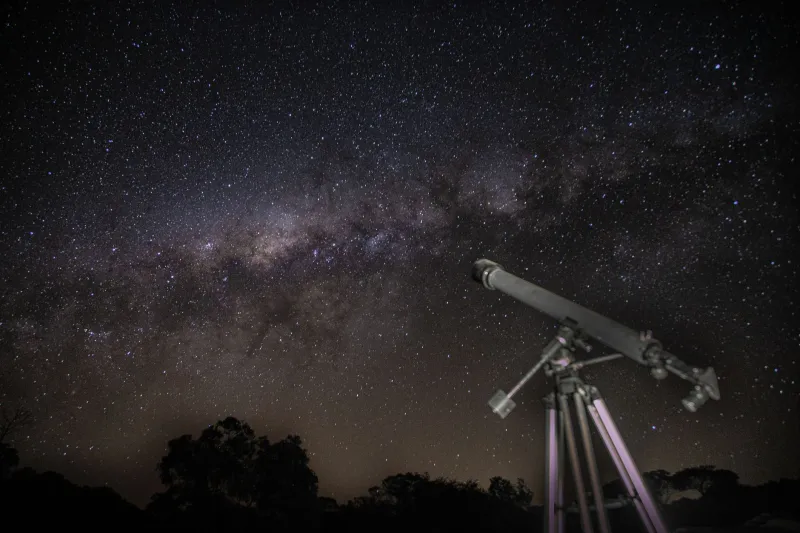
Somewhere in a suburban garage in central California, a retired electrician named Gary Hug is doing something that sounds like science fiction. He's photographing distant galaxies, stacking images on a secondhand laptop, and comparing tonight's sky to last week's — hunting for a pinprick of light that wasn't there before. If he finds one, he might have just witnessed the death of a star hundreds of millions of light-years away.
This isn't a rare hobby. It's a movement.
Amateur astronomers across the United States — and around the world — are actively contributing to one of astronomy's most time-sensitive frontiers: supernova detection. And in some cases, they're beating the professionals to the punch.
What Even Is a Supernova, and Why Does It Matter?
When a massive star exhausts its nuclear fuel, gravity wins. The star's core collapses in a fraction of a second, triggering a catastrophic explosion that can briefly outshine an entire galaxy. These events — supernovae — are more than just spectacular light shows. They seed the cosmos with heavy elements like iron, calcium, and gold. The iron in your blood? Forged in a dying star. Supernovae also help astronomers measure cosmic distances and study the expansion of the universe.
But here's the catch: supernovae are fleeting. The earliest hours and days after an explosion carry the richest scientific data, and professional observatories can't watch every corner of the sky all the time. That's exactly where citizen scientists come in.
The Tools of the Trade (They're More Affordable Than You'd Think)
You don't need a $500,000 research telescope to join the hunt. Many successful amateur supernova hunters work with equipment that costs a few thousand dollars — sometimes less. A solid 8- to 12-inch reflector telescope paired with a CCD or CMOS camera is a common starting setup. Pair that with free or low-cost software like Astrometrica or the open-source Munipack, and you've got a functioning supernova patrol station in your backyard.
Smartphone apps have also lowered the barrier dramatically. Platforms like Stellarium and SkySafari help amateurs plan their nightly target lists, while citizen science portals like the American Association of Variable Star Observers (AAVSO) and the Backyard Astronomical Survey coordinate observations across thousands of participants.
Perhaps the most powerful tool is the database. Programs like the Transient Name Server (TNS) — run by the International Astronomical Union — log every newly reported transient event in near real time. Amateurs can check their discoveries against this database within minutes of spotting something unusual.
Real People, Real Discoveries
The amateur supernova hunting community has a surprisingly deep hall of fame.
Tom Boles, a British amateur, holds the world record for individual supernova discoveries — over 150 confirmed finds using a relatively modest setup in his backyard observatory. In the US, the Puckett Observatory Supernova Search, run by Tim Puckett in Georgia, has racked up hundreds of confirmed supernovae over the years using a network of automated telescopes.
Then there's the story of SN 2023bee, a Type Ia supernova spotted in early 2023. Amateur observers flagged the event within hours of its appearance in a nearby spiral galaxy, alerting professional teams who were then able to capture critical early-phase spectroscopy — data that would have been lost if the discovery had come even a day later.
These aren't outliers. They're becoming the norm.
Why Professionals Actually Love This
It might seem like amateur discoveries would bruise a few egos in academia. But the opposite is true. Professional astronomers are openly enthusiastic about citizen science contributions, and for good reason.
Large sky surveys like the Zwicky Transient Facility (ZTF) at Palomar Observatory in California and the upcoming Vera C. Rubin Observatory in Chile are designed to scan huge swaths of sky automatically. But they generate enormous amounts of data — far more than any research team can analyze alone. Citizen scientists help triage that flood of information, flagging real events and filtering out noise.
More importantly, amateurs provide something surveys can't: targeted, persistent monitoring of specific galaxies. A dedicated hobbyist might photograph the same 50 galaxies every clear night for years. That kind of sustained attention catches supernovae that automated systems miss entirely.
Dr. Federica Bianco, an astrophysicist at the University of Delaware who works on transient event research, has spoken publicly about how crucial community observers are to modern astronomy. The sentiment is widespread: citizen scientists aren't just helpful — they're filling genuine gaps in professional coverage.
Getting Started: Your First Supernova Patrol
Thinking about joining the hunt? Here's how most beginners get their footing.
Pick your targets. Focus on nearby galaxies — within about 50 million light-years — where supernovae are bright enough to detect with modest equipment. The Virgo Cluster and galaxies like M81, M101, and NGC 6946 (nicknamed the "Fireworks Galaxy" for its frequent supernovae) are popular starting points.
Learn image subtraction. The core technique is comparing a fresh image of a galaxy to a reference image taken previously. Any new point of light that appears is worth investigating. Software like Astrometrica automates much of this process.
Report through official channels. If you spot something suspicious, don't just post it on social media. Submit it to the Transient Name Server and notify the AAVSO or a local astronomy club. Verification matters — not every new dot is a supernova.
Join a network. Groups like the Rochester Astronomy Club's supernova patrol team or the Collaborative Asteroid Lightcurve Link (CALL) community connect amateurs with shared resources, peer review, and mentorship from more experienced hunters.
The Bigger Picture
There's something quietly profound about what these backyard astronomers are doing. They're not just collecting data points. They're watching the universe evolve in real time, catching moments of stellar death that would otherwise go unwitnessed. Every confirmed supernova adds to humanity's understanding of how galaxies grow, how elements spread through space, and how the cosmos itself is expanding.
And they're doing it from driveways in Ohio, rooftops in Arizona, and rural fields in Montana.
Professional astronomy has always depended on the passion of people who simply love the sky. The tools have changed — from hand-drawn star charts to AI-assisted image stacking — but the impulse is the same. Look up. Pay attention. Something out there is happening right now, and you might be the first person in history to see it.
That's not a small thing. That's the whole point of exploration.