Earth's Orbit Is Filling Up With Junk — And the Clock Is Already Ticking
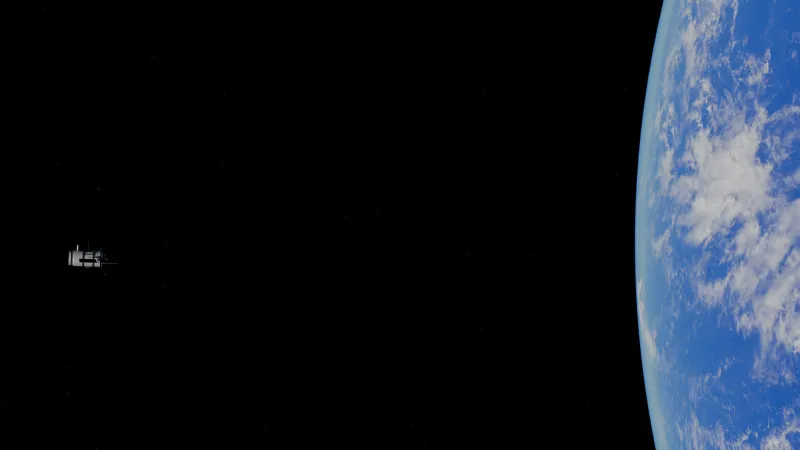
Imagine planning a road trip across the country, only to find the highway littered with abandoned cars, broken-down trucks, and shards of metal flying at you at 17,000 miles per hour. That's not a dystopian fantasy — it's a pretty reasonable analogy for what's happening roughly 250 to 1,200 miles above your head right now.
Earth's orbital environment is getting crowded. Fast. And scientists across NASA, the European Space Agency, and a growing number of private research institutions are sounding the alarm: if we don't make meaningful progress on the space debris problem within the next decade, we risk crossing a threshold that could fundamentally reshape — or even cripple — humanity's ability to operate in space.
How Bad Is It, Really?
The numbers are genuinely staggering. The U.S. Space Surveillance Network currently tracks roughly 27,000 pieces of debris larger than a softball orbiting Earth. But that's only the stuff we can actually see. Estimates suggest there are around 500,000 marble-sized fragments and potentially hundreds of millions of particles smaller than a centimeter zipping around up there — each one capable of disabling or destroying an operational spacecraft on impact.
The sheer velocity involved makes size almost irrelevant. A fleck of paint traveling at orbital speeds carries the kinetic energy of a bullet. A bolt or a wrench? That's closer to a small explosive.
Low Earth orbit — the zone between roughly 100 and 1,200 miles altitude — is where the problem is most acute. It's also where the International Space Station lives, where most Earth observation satellites operate, and where the booming constellation business (think SpaceX's Starlink and Amazon's Project Kuiper) is staking its future.
The Kessler Syndrome: Space's Worst-Case Scenario
Back in 1978, NASA scientist Donald Kessler proposed a troubling hypothesis: if the density of objects in low Earth orbit ever got high enough, a single collision could trigger a chain reaction. Debris from that collision hits something else. That generates more debris. Which hits more satellites. And so on — a cascading catastrophe that could render entire orbital bands unusable for decades, or even centuries.
We haven't hit that tipping point yet. But researchers increasingly believe we're edging closer to it, particularly in certain altitude bands. The 2009 collision between an active Iridium communications satellite and a defunct Russian Kosmos satellite — which generated over 2,000 trackable fragments — offered a chilling preview of what runaway debris escalation could look like.
"We're in a race," says one orbital debris researcher whose work has been cited by both NASA and ESA. "Not a dramatic, Hollywood-style race — more like the slow creep of a tide coming in. But the waterline is rising."
Who's Actually Working on This?
The good news — and there is some — is that the problem has attracted serious attention and some genuinely creative engineering.
NASA and government agencies have been refining debris tracking capabilities and developing updated guidelines for satellite operators, including the long-standing but inconsistently followed recommendation that spacecraft in low Earth orbit deorbit within 25 years of mission completion. There's growing pressure to tighten that standard to just five years.
The European Space Agency's ClearSpace-1 mission, currently in development, aims to be the first active debris removal mission in history. The plan involves launching a spacecraft that will essentially grab a retired ESA rocket adapter and drag it into the atmosphere to burn up. It's a proof-of-concept, but a significant one.
Astroscale, a Japanese company with U.S. operations, has been making waves with its ELSA-d mission — a demonstration of magnetic docking technology designed to capture and deorbit defunct satellites. It's the kind of entrepreneurial approach that could eventually scale into a commercial debris removal industry.
Laser-based solutions are also on the table. Researchers have explored the idea of using ground-based or space-based lasers to nudge small debris fragments into lower orbits where atmospheric drag will naturally pull them down. It sounds like science fiction, but the physics checks out — the engineering challenges are just, well, enormous.
The Policy Problem Is Just as Hard as the Tech Problem
Here's the thing that doesn't get enough attention in conversations about orbital debris: the technology, while genuinely difficult, might actually be the easier half of this challenge.
Space is a global commons. No single country owns low Earth orbit. Debris created by a Russian rocket launch is just as dangerous to an American GPS satellite as anything the U.S. has put up there. Coordinating international cleanup efforts — agreeing on who pays, who has the authority to approach and remove another nation's defunct satellite, and what legal frameworks govern all of it — is a diplomatic puzzle that makes the engineering look almost straightforward.
The 1967 Outer Space Treaty technically designates nations as responsible for their space objects even after they stop functioning. But enforcement mechanisms are essentially nonexistent, and the treaty predates the commercial space era by decades. Legal scholars and space policy experts have been arguing for updated frameworks for years, with limited traction.
In the U.S., the Federal Communications Commission has started requiring satellite operators to commit to faster deorbit timelines as a condition of licensing. It's a step — but critics argue it doesn't go nearly far enough, and international coordination remains elusive.
What Happens If We Don't Fix It?
The consequences of inaction aren't just abstract. A seriously degraded orbital environment would affect daily American life in ways most people never think about. GPS navigation, weather forecasting, military communications, financial transaction timing, agricultural monitoring — virtually all of it depends on satellites operating safely in the zones most threatened by debris accumulation.
Beyond practical infrastructure, there's the broader question of human ambition in space. The Moon, Mars, deep space exploration — all of it requires launching through and operating within Earth's orbital neighborhood. A Kessler-style cascade event in low Earth orbit wouldn't just be an inconvenience. It could effectively slam the door on human spaceflight for a generation.
The Next Ten Years Matter More Than Most People Realize
Scientists who study this problem don't use the word "crisis" lightly. But a growing number of them are using it now. The window for manageable intervention — before debris densities in key orbital zones pass critical thresholds — is real, and it's measured in years, not decades.
The solutions exist, at least in prototype form. The policy conversations are happening, even if progress is frustratingly slow. And the commercial space industry, which has a massive financial stake in keeping orbit functional, is increasingly part of the solution rather than just part of the problem.
What's needed now is urgency — the kind that turns promising experiments into operational systems, and tentative international discussions into binding agreements.
The orbit above us is one of the most valuable resources humanity has ever had access to. Keeping it usable is going to require the same creativity and determination that got us up there in the first place.