Cosmic Eavesdroppers: How Everyday Americans Are Picking Up Signals From the Edge of the Universe
Somewhere in a suburb outside of Columbus, Ohio, a retired electrical engineer has a modest radio telescope mounted in his backyard. It doesn't look like much — a repurposed satellite dish, a software-defined radio receiver, and a laptop running open-source signal processing software. But on a clear Tuesday night last spring, that setup flagged something extraordinary: a repeating burst of radio energy that matched the signature of a known pulsar catalogued thousands of light-years away.
He's not alone. Across the country, a quietly growing community of amateur radio astronomers is doing something that sounds almost implausible — they're eavesdropping on the cosmos, and occasionally, they're hearing things that matter.
What Exactly Are They Listening For?
The universe is not a quiet place. Beneath the visible light we see with our eyes and optical telescopes, space is absolutely crackling with radio energy. Pulsars — rapidly rotating neutron stars — emit precise, clockwork-like bursts of radio waves. Fast Radio Bursts, or FRBs, are intense millisecond-long flashes whose origins are still hotly debated among professional astrophysicists. Hydrogen line emissions paint a map of galactic structure. And then there are the gravitational wave candidates — ripples in spacetime that, while not radio waves themselves, can produce electromagnetic counterparts that radio-sensitive equipment might catch.
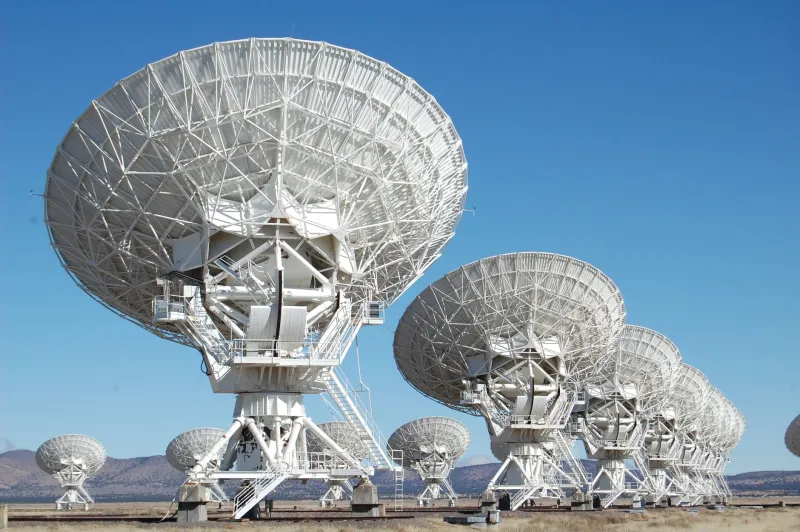
Professional observatories like the Very Large Array in New Mexico and the massive FAST telescope in China have traditionally monopolized this kind of detection work. The equipment costs millions. The expertise required takes years to build. So how is it that a hobbyist with a few hundred dollars in gear is suddenly part of the conversation?
The short answer: software changed everything.
The Democratization of the Radio Sky
The single biggest enabler of the amateur radio astronomy boom has been the software-defined radio, or SDR. These small USB-connected devices — some selling for as little as $25 — can receive a wide range of radio frequencies and pipe that data directly into a laptop. Pair one with free software like GNU Radio or the astronomy-specific Skynet interface, and suddenly you have a functional radio receiver capable of picking up signals from space.
Beyond the hardware, platforms like SETI@home's spiritual successors, the Zooniverse project network, and dedicated communities on forums like Reddit's r/radioastronomy have created ecosystems where amateurs can share data, cross-reference findings, and flag anomalies for professional review.
"The barrier to entry has genuinely collapsed," says one community organizer who runs a citizen science coordination group focused on pulsar timing. "Five years ago, you needed institutional access to do any of this meaningfully. Now someone with a $300 setup and a decent internet connection can contribute real observations."
Real Contributions, Not Just Hobbyist Fun
It would be easy to dismiss backyard radio astronomy as a fun pastime that produces little of scientific value. That assumption is increasingly wrong.
The pulsar timing community is a particularly compelling example. Pulsars rotate with such mechanical precision that they function as natural clocks. By monitoring slight variations in their pulse timing — a field called pulsar timing arrays — scientists can detect distortions caused by passing gravitational waves. The North American Nanohertz Observatory for Gravitational Waves, known as NANOGrav, has been doing exactly this with professional telescopes. But the sheer volume of observations needed means that additional monitoring points — even less sensitive ones — add statistical value to the dataset.
Some amateur groups have begun coordinating with university radio astronomy departments to submit cleaned, timestamped observation logs that can supplement professional data. It's not peer-reviewed science on its own, but it feeds into pipelines that are.
On the FRB front, the challenge is different. Fast Radio Bursts are so brief and unpredictable that catching one requires either extraordinary luck or an enormous number of eyes on the sky simultaneously. A distributed network of amateur listeners — essentially a crowd-sourced radio telescope array — dramatically increases the odds of flagging an event in real time. Projects inspired by this logic have begun piloting exactly that kind of coordinated monitoring.
What You Actually Need to Get Started
If this is sounding appealing, here's the honest breakdown of what getting into amateur radio astronomy actually looks like.
Entry level ($50–$300): An RTL-SDR dongle, a basic dipole or Yagi antenna, and free software like SDR# or GNU Radio. At this level, you can detect the 1420 MHz hydrogen line — the signature frequency of neutral hydrogen gas drifting through the galaxy. It's not glamorous, but mapping hydrogen emission is legitimate science, and plenty of contributors start here.
Intermediate level ($300–$1,500): A dedicated dish antenna (repurposed DirecTV dishes work surprisingly well), a low-noise amplifier to boost weak signals, and more sophisticated software pipelines. At this tier, pulsar detection becomes feasible for strong, nearby pulsars like the Vela pulsar.
Advanced setups ($1,500+): Custom-built or research-grade dishes, precision clock references (often GPS-disciplined oscillators for accurate timing), and integration with citizen science data networks. This is where contributors start submitting data that professional researchers actually look at.
Beyond hardware, the most important investment is time spent learning. The Radio Astronomy Supplies community, the Society of Amateur Radio Astronomers (SARA), and university extension programs all offer resources ranging from beginner guides to technical workshops.
The Bigger Picture
There's something genuinely exciting happening at the intersection of affordable technology and scientific curiosity. The idea that the universe's deepest signals — bursts from magnetars, the slow pulse of ancient neutron stars, the hydrogen hum of spiral arms — can be detected by someone in their backyard in suburban America feels almost radical.
But it's real, and it's growing. NASA's citizen science program has increasingly recognized the value of distributed observation networks, and several university research groups are actively looking for ways to formalize data-sharing agreements with organized amateur communities.
The universe has been broadcasting for billions of years. The equipment to listen has never been more accessible. Whether you're a student trying to build a college application that actually stands out, a retiree looking for a project with genuine depth, or just someone who finds the idea of catching a signal from a dead star irresistible — the radio sky is open for business.
All you have to do is tune in.