Seeing the Unseeable: How Infrared Light Is Blowing Open Our Understanding of the Hidden Cosmos
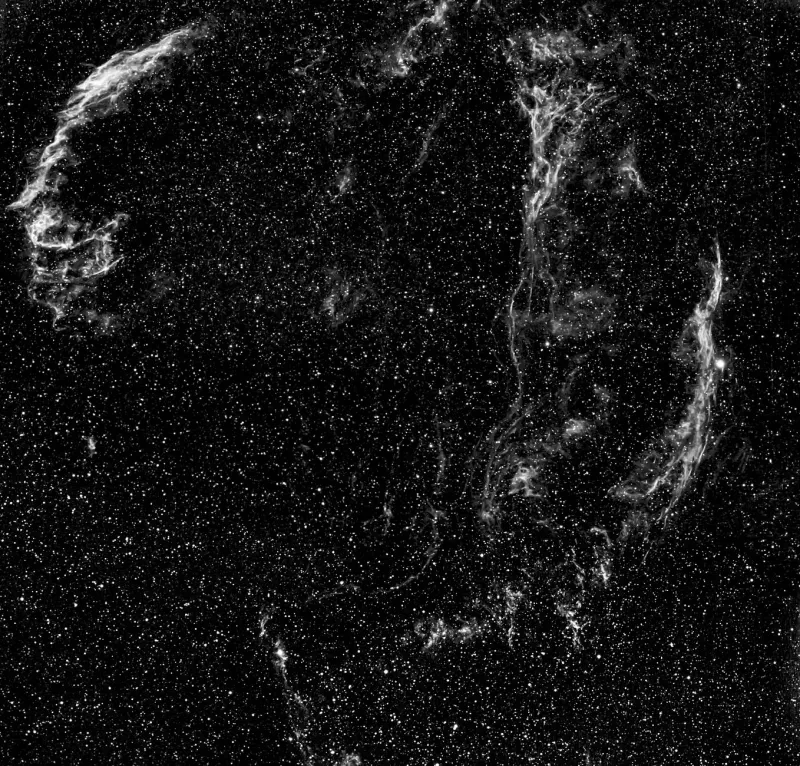
Imagine trying to watch a fireworks show through a thick wool blanket. You'd catch some muffled flashes, maybe a hint of color, but you'd miss most of the spectacle entirely. That's essentially what optical telescopes have been doing for centuries — staring at a universe that keeps a huge chunk of its most dramatic action wrapped up in clouds of gas and dust that block visible light like that hypothetical blanket.
Infrared astronomy is the equivalent of yanking that blanket away.
Over the past few decades, infrared-capable telescopes have fundamentally changed what we can see out there. From stellar nurseries hidden inside dense molecular clouds to supermassive black holes gorging on matter at the centers of distant galaxies, infrared light is revealing a cosmos that's far richer, stranger, and more active than what we can observe with our own eyes.
Why Dust Is Both a Problem and a Clue
Cosmic dust might sound like a minor nuisance, but it's actually one of the biggest obstacles in observational astronomy. These aren't the dust bunnies under your couch — we're talking about clouds of tiny solid particles, mostly silicates and carbon compounds, that drift through galaxies in enormous quantities. When starlight or other radiation tries to travel through these clouds, the dust absorbs and scatters the shorter wavelengths of visible light, effectively making whatever's behind the cloud invisible to optical instruments.
Here's the twist, though: that same dust absorbs energy and re-emits it at longer wavelengths — specifically, in the infrared. So the very material that's blocking our view is also broadcasting a signal we can detect, if we have the right instruments. Dust doesn't hide from infrared detectors; it practically waves at them.
This is why astronomers have increasingly turned to infrared observation not just as a workaround, but as a primary tool for understanding how the universe evolves.
The Technology Making It Possible
Detecting infrared light isn't as simple as swapping out a camera lens. Infrared radiation spans a huge range of wavelengths — from near-infrared, which is just beyond what human eyes can see, all the way to far-infrared and submillimeter wavelengths that border on microwave territory. Each part of that spectrum requires different detector technology.
Near-infrared detectors are similar in principle to the sensors in your smartphone camera, but engineered with materials like mercury cadmium telluride that are sensitive to longer wavelengths. The tricky part? Infrared detectors are themselves warm objects that emit the very radiation they're trying to detect. To avoid drowning out faint cosmic signals, the instruments — and in some cases, the entire telescope — have to be cooled to cryogenic temperatures, sometimes just a few degrees above absolute zero.
The James Webb Space Telescope, NASA's crown jewel currently operating about a million miles from Earth at the L2 Lagrange point, takes this challenge seriously. Its instruments are cooled to as low as minus 448 degrees Fahrenheit. Its massive gold-coated mirror and sunshield work together to maintain those temperatures while collecting infrared light from across the cosmos. The result is an observatory so sensitive it could theoretically detect the heat signature of a bumblebee on the moon.
Stellar Nurseries: Where Stars Are Born in Secret
One of the most visually stunning payoffs of infrared astronomy is the ability to peer inside stellar nurseries — regions of dense gas and dust where new stars are actively forming. In visible light, these regions look like dark, featureless blobs or, at best, colorful but opaque nebulae. In infrared, they explode with detail.
The famous Pillars of Creation in the Eagle Nebula, made iconic by the Hubble Space Telescope, look completely different when viewed in infrared. Webb's infrared imaging of the same structure reveals young stars embedded deep within the pillars, previously invisible behind the dust. Jets of material blasting outward from newborn protostars become visible. The whole messy, violent process of star formation — which had been largely hidden — suddenly becomes legible.
Understanding star formation matters for a pretty fundamental reason: it's how the universe builds everything. Stars are the factories that forge heavier elements, and those elements eventually make their way into planets, atmospheres, and, well, us. Watching stars being born in real time helps astronomers piece together the timeline of cosmic evolution.
Black Holes and Galactic Centers
The centers of most large galaxies, including our own Milky Way, are messy, crowded environments packed with stars, gas, and dust — and almost always anchored by a supermassive black hole. Studying these regions in visible light is essentially impossible. The dust is just too thick.
Infrared observation changes the game entirely. By looking in the near- and mid-infrared, astronomers can track individual stars orbiting the Milky Way's central black hole, Sagittarius A*, with extraordinary precision. Those orbital measurements helped confirm the black hole's existence and nail down its mass — roughly four million times that of our sun. That work, led by astronomers Andrea Ghez and Reinhard Genzel, earned the Nobel Prize in Physics in 2020. Infrared data was central to the whole effort.
Beyond our own galaxy, infrared telescopes have revealed active galactic nuclei — the blazing cores of galaxies where supermassive black holes are actively consuming material — that would otherwise be completely obscured. This has opened up entirely new lines of research into how black holes grow, how they interact with their host galaxies, and what role they play in regulating star formation across cosmic history.
Peeking Back to the Beginning
Perhaps the most profound application of infrared astronomy is looking at the earliest galaxies in the universe. Because the universe is expanding, light from extremely distant objects gets stretched to longer wavelengths by the time it reaches us — a phenomenon called cosmological redshift. The farther away a galaxy is, the more its light gets shifted toward the red and infrared end of the spectrum.
This means that to see galaxies from the universe's first few hundred million years, you essentially have to observe in infrared. Webb has been doing exactly that, and the results have been jaw-dropping. Galaxies that formed when the universe was less than 5% of its current age are showing up in Webb images, and some of them are surprisingly massive and well-structured — which is challenging some long-held models of how early galaxies assembled.
Every new Webb image release feels like getting a new page from a history book we didn't even know existed.
What Comes Next
Infrared astronomy is nowhere near finished surprising us. Upcoming missions and ground-based observatories are pushing the technology even further. NASA's Nancy Grace Roman Space Telescope, set to launch later this decade, will survey the infrared sky in wide fields, hunting for dark energy signatures, exoplanets, and transient events across the cosmos.
Meanwhile, ground-based observatories equipped with adaptive optics — systems that correct for atmospheric distortion in real time — are getting better at doing infrared science from right here on Earth, complementing the work of space-based instruments.
The universe has always been there, humming away in wavelengths we couldn't detect. Infrared astronomy is finally giving us the ears — or rather, the eyes — to actually listen. And what we're hearing is extraordinary.