Kissing the Sun: What NASA's Daring Solar Probe Is Teaching Us About Our Star's Fiery Secrets
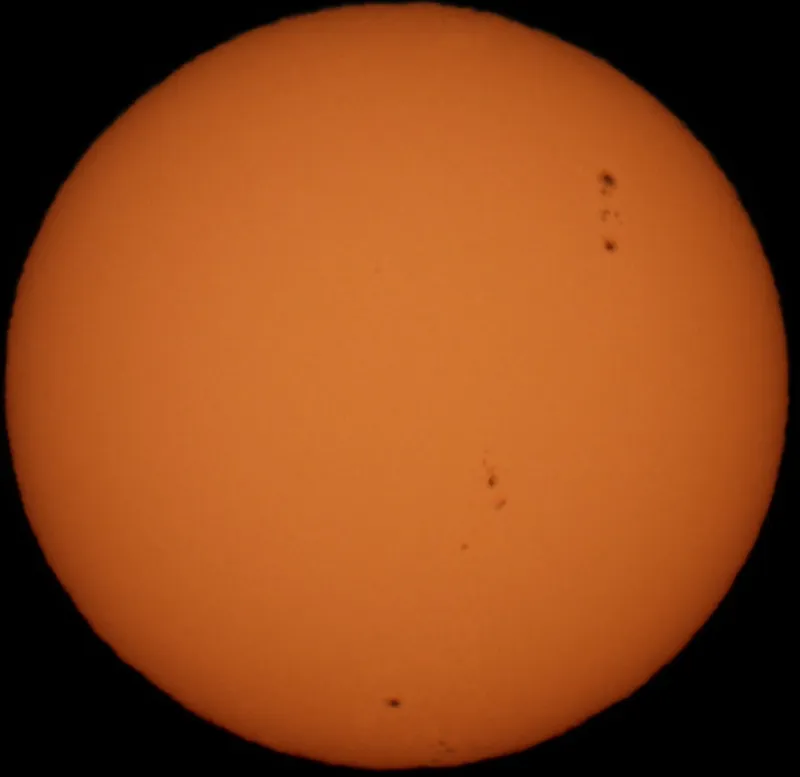
Imagine suiting up for a swim in a pool that's somehow hotter on the outside than it is at the bottom. That's essentially the paradox our sun has been serving up to scientists for decades — and it's one of the most stubborn puzzles in all of astrophysics. The sun's visible surface, the photosphere, clocks in at roughly 10,000 degrees Fahrenheit. But travel outward into the corona — the wispy, ghostly halo of plasma that crowns our star — and temperatures skyrocket to somewhere between 1 and 10 million degrees. Heat flowing away from its source and somehow getting hotter? That breaks basically every rule your high school physics teacher laid down.
Enter NASA's Parker Solar Probe. Since its launch in August 2018, this compact, carbon-shielded spacecraft has been doing what no human-made object has done before: flying directly through the sun's outer atmosphere, skimming closer to our star with every orbit, and sending back data that is genuinely shaking up solar science.
Getting Uncomfortably Close
Parker isn't just nudging up near the sun — it's going deep. As of its most recent close approaches, the spacecraft has swooped to within about 4 million miles of the solar surface. That might sound like a comfortable margin, but in space terms, it puts Parker well inside the corona itself. For context, Mercury, the innermost planet, orbits at roughly 36 million miles from the sun. Parker is operating in territory that's nine times closer than that.
To survive this environment, engineers at the Johns Hopkins Applied Physics Laboratory built Parker a custom heat shield — a 4.5-inch-thick carbon composite foam sandwiched between carbon fiber panels. The shield faces temperatures that can reach 2,500 degrees Fahrenheit, while the instruments tucked behind it stay at a relatively balmy room temperature. It's one of the more impressive feats of thermal engineering in NASA history, and it's what makes the whole mission possible.
The spacecraft uses a series of gravity assists from Venus to gradually tighten its orbit around the sun. Each flyby pulls Parker into a tighter loop, setting up progressively closer solar encounters. The mission is designed to reach its minimum distance — roughly 3.8 million miles from the surface — before the mission concludes.
The Corona Problem, Explained
So why does the corona run so absurdly hot? Scientists have been wrestling with this question since the 1940s, and Parker is finally delivering some real answers.
One leading explanation involves structures called switchbacks — sudden, sharp reversals in the direction of the solar magnetic field embedded within the solar wind. Parker's instruments detected these zigzagging magnetic field lines almost immediately after launch, and they've been a major focus of analysis ever since. The current thinking is that these switchbacks may be transporting energy outward from the solar surface, essentially injecting bursts of heat into the corona as they propagate away from the sun.
Think of it like snapping a towel — the motion at your end sends a wave of energy all the way to the tip. Something similar may be happening along magnetic field lines stretching out from the sun's surface, and Parker is catching these energy pulses in real time.
Another piece of the puzzle involves velocity spikes associated with those switchbacks. When Parker crosses through one of these magnetic reversals, the solar wind speed jumps dramatically — sometimes doubling in a matter of seconds. These jets of fast-moving plasma could be one of the mechanisms dumping energy into the corona, though researchers are still working out the exact physics.
Solar Wind: Not the Simple Breeze We Thought
Beyond the coronal heating mystery, Parker is completely overhauling our picture of solar wind — the stream of charged particles the sun continuously blows outward through the solar system.
For years, scientists modeled solar wind as a relatively uniform, gradual outflow. Parker's close-up measurements have revealed it's anything but. The solar wind near the sun is turbulent, structured, and full of surprises. Parker has detected dust-free zones close to the sun (the intense radiation blasts dust particles apart before they can accumulate), localized jets of plasma, and complex wave patterns that weren't visible from farther away.
One particularly striking finding: Parker traced the origin of certain solar wind streams back to specific features on the solar surface called coronal holes — regions where the sun's magnetic field opens outward into space rather than looping back. These holes act like nozzles, funneling fast-moving solar wind directly into the solar system. Knowing exactly where the wind comes from and how it accelerates helps scientists build better predictive models of space weather.
Why This Matters Back on Earth
Here's where Parker's science gets personal for Americans. Solar storms — driven by eruptions on the sun and turbulence in the solar wind — can wreak havoc on Earth's technological infrastructure. In 1989, a powerful geomagnetic storm knocked out the power grid across Quebec for nine hours. A 2003 storm damaged transformers in South Africa and disrupted airline communications across the globe. Scientists estimate that a sufficiently powerful storm could cause trillions of dollars in damage to satellites, GPS systems, and power grids in the United States alone.
The better we understand how solar wind forms, how it accelerates, and what triggers the most explosive solar events, the better chance we have of predicting dangerous storms before they hit. Parker is essentially building the scientific foundation for a future early-warning system — one that could give utility companies and satellite operators enough lead time to protect their hardware.
There's also a deep-space exploration angle here. Any crewed mission to Mars or beyond will expose astronauts to elevated solar radiation for months or years at a stretch. Understanding the structure and behavior of solar wind is critical to designing shielding systems and planning mission windows that avoid the worst radiation events.
What Comes Next
Parker's mission is far from over. The probe continues to execute Venus flybys, tightening its orbit and setting up even closer solar encounters. Each new perihelion — the point of closest approach — brings fresh data from regions of the corona that have never been directly sampled.
Scientists are particularly eager to correlate Parker's in-situ measurements with observations from NASA's Solar Dynamics Observatory and the European Space Agency's Solar Orbiter, which is imaging the sun from a different vantage point. Combining data from multiple spacecraft gives researchers a three-dimensional picture of solar activity that no single mission could provide alone.
Parker's final planned close approaches, slated for the mid-2020s, will bring it closer to the sun than any spacecraft before it. At those distances, the probe will be sampling some of the most energetically active regions of the corona — exactly where the answers to the coronal heating mystery are most likely hiding.
A Star Worth Knowing
It's easy to take the sun for granted. It rises every morning, keeps the planet warm, and generally minds its own business. But up close, it's a roiling, violent, magnetically complex machine — and we've barely scratched the surface of understanding it.
Parker Solar Probe is our best instrument for peeling back those layers, and what it's finding is genuinely exciting. Every orbit brings new data, new surprises, and new reasons to appreciate just how dynamic our home star really is. For a mission built to touch the sun, it's doing a pretty remarkable job of illuminating the dark.