The Last Quiet Places: Why Scientists Are Fighting to Keep Radio Silence Alive on Earth
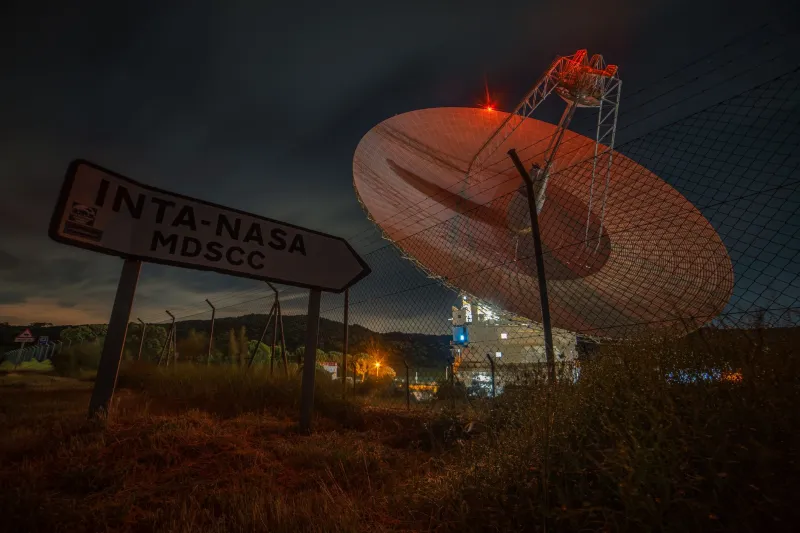
Driving into Green Bank, West Virginia, you'll notice something strange before you even see the telescopes. Your phone loses signal. The radio goes static. Even some cars — the ones with wireless key fobs — stop working properly. You've crossed into one of the most carefully protected electromagnetic environments on the planet, and out here, that silence isn't an inconvenience. It's the whole point.
The Green Bank Observatory sits at the heart of the National Radio Quiet Zone, a 13,000-square-mile bubble of restricted wireless activity that stretches across parts of West Virginia and Virginia. It's one of only a handful of places in the United States — and on Earth — where radio silence is literally written into law. And right now, as 5G towers multiply and satellite mega-constellations blink into orbit by the thousands, the scientists who depend on that silence are getting nervous.
What Exactly Is a Radio Quiet Zone?
A radio quiet zone, at its most basic, is a geographic area where radio frequency emissions are tightly regulated or outright banned. The idea is simple: radio telescopes listen for incredibly faint signals from deep space — the kind of signals that can be billions of light-years away and arrive at Earth carrying less energy than a single snowflake hitting the ground. Even the weakest Wi-Fi router, if it's close enough, can drown those signals out completely.
The National Radio Quiet Zone around Green Bank was established back in 1958, shortly after the observatory was founded. The rules inside it are strict. Residents can't use standard microwave ovens. Cell towers are banned within a certain radius. Diesel vehicles are preferred over gasoline ones because spark plugs generate radio interference. The observatory even employs a full-time radio frequency interference (RFI) engineer whose entire job is tracking down rogue signals — everything from faulty electrical fences to a resident's malfunctioning electric blanket.
Similar protections exist elsewhere in the US. The Very Large Array in New Mexico, the iconic cluster of 27 dish antennas that's probably been in more science documentaries than any other telescope, sits in a remote stretch of the Plains of San Agustin partly for the same reason. Distance from cities means distance from noise. The Arecibo Observatory in Puerto Rico, before its tragic collapse in 2020, also benefited from its isolated mountainous setting.
Globally, the picture is similar. Australia's Murchison Radio-astronomy Observatory operates under strict RFI rules. Chile's Atacama Desert hosts some of the world's most sensitive radio arrays, and its remoteness is a feature, not a bug.
The Science That Lives in the Silence
So what exactly are astronomers listening for in these quiet zones? A lot, it turns out.
Radio astronomy has been responsible for some of the most significant discoveries in the history of science. Pulsars — the rapidly spinning remnants of dead stars that blink like cosmic lighthouses — were first detected via radio waves. The cosmic microwave background, the faint afterglow of the Big Bang itself, was discovered accidentally by radio engineers at Bell Labs in the 1960s. More recently, fast radio bursts, those mysterious millisecond-long blasts of radio energy from across the universe, have become one of the hottest topics in astrophysics — and they can only be studied cleanly from sites with serious RFI protections.
Then there's the search for extraterrestrial intelligence. SETI researchers looking for artificial signals from other civilizations need the cleanest possible radio environment to distinguish a genuine alien transmission from the noise floor of human technology. Green Bank has hosted SETI projects for decades, and the observatory remains one of the primary sites for that kind of work today.
Hydrogen line observations — detecting the 1420 MHz signal naturally emitted by hydrogen atoms throughout the galaxy — are crucial for mapping the structure of the Milky Way. That specific frequency is internationally protected, but the spectrum around it is increasingly cluttered, and spillover interference is a growing headache.
The New Threats Closing In
For most of the 20th century, the main threats to radio quiet zones were local: a new cell tower here, a growing town there. Those were manageable. What's happening now is a different kind of problem entirely.
SpaceX's Starlink constellation already has thousands of satellites in low Earth orbit, and the company has approval for tens of thousands more. Amazon's Project Kuiper is close behind. OneWeb, Telesat, and a handful of Chinese providers are adding their own layers. These constellations are primarily designed for internet service, which means they're constantly transmitting and receiving radio signals — and those signals rain down on the entire surface of the planet, not just populated areas.
Even if a satellite's primary transmission frequencies don't directly overlap with the bands astronomers use, the sheer density of objects in orbit creates what researchers call "unintended emissions" — stray radio leakage from electronics onboard the satellites that bleeds across the spectrum. A single satellite might be manageable. Forty thousand of them is a different equation.
The International Astronomical Union and the National Science Foundation have both raised formal concerns. Negotiations between observatory operators and satellite companies like SpaceX have produced some partial accommodations — SpaceX has experimented with darkening satellites to reduce optical interference and adjusting transmission protocols near sensitive sites — but astronomers say those measures fall well short of what's actually needed.
"The trajectory is not good," one radio astronomer put it bluntly at a recent conference. "Every year, the noise floor goes up a little more, and every year, the science we can do goes down a little."
Can Quiet Zones Survive the Connected Age?
There's no easy answer here, and anyone who tells you otherwise is oversimplifying. The economic and social benefits of global broadband connectivity are real. Millions of Americans in rural areas lack reliable internet access, and satellite constellations are a genuine solution to that problem. That's not nothing.
But the science that happens in radio quiet zones isn't a niche hobby. It's foundational research that has historically produced discoveries nobody predicted — and that's precisely the kind of work that tends to reshape entire fields. The practical applications of pulsar timing, for instance, include ultra-precise navigation systems. Understanding the interstellar medium through hydrogen mapping has implications for everything from star formation models to theories about how galaxies evolve.
Some researchers are exploring technological workarounds: smarter algorithms that can filter out known interference sources, new receiver designs that are more resilient to RFI, and even the idea of building radio observatories on the far side of the Moon, where Earth itself would block all human-made radio noise. That last option is genuinely exciting — NASA and international partners have floated lunar far-side observatory concepts — but it's also decades and billions of dollars away from being a reality.
In the meantime, the fight to preserve what quiet remains on Earth is getting more urgent by the year.
Silence as Infrastructure
It's worth reframing how we think about places like Green Bank. Radio quiet zones aren't relics of a pre-wireless age. They're critical scientific infrastructure — the astronomical equivalent of a clean room in a semiconductor fab or a vibration-isolated lab for gravitational wave detection. You can't do the science without the environment.
Next time you're somewhere with full bars and blazing fast LTE, take a second to appreciate what that connectivity cost. Somewhere out in a quiet valley in West Virginia, a massive dish is slowly turning, straining to catch a whisper from the edge of the observable universe. And the people running it are hoping the rest of us can keep it down just long enough to hear what's out there.